Which Finger is Best for a Pulse Oximeter Reading?
Introduction
How Does Pulse Oximetry Work?
Which Finger is Best for a Pulse Oximeter Reading?
Factors That Can Affect a Pulse Oximeter Reading
Introduction
Pulse oximeters attach to a body part to measure the oxygen saturation level of a patient’s blood. It is most common to attach pulse oximeters to the fingertip. However, which finger is best for obtaining an accurate reading? Read on to learn more.
How Does Pulse Oximetry Work?
Pulse oximeters are clipped onto a part of the body, usually the tip of a finger. Pulse oximeters emit light that pass through the fingernail, skin, tissue, and blood. A sensor then measures the amount of light that passes through the finger that isn’t absorbed by the tissue and blood. Using that measurement, the device calculates the oxygen saturation of the blood, which is used for recording the perfusion index (PI).
Which Finger is Best for a Pulse Oximeter Reading?
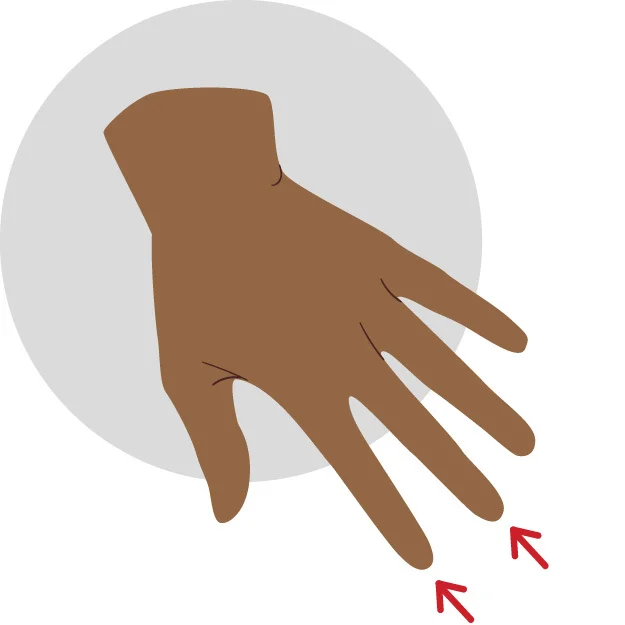
Healthcare providers suggest clipping pulse oximeters to the patient’s index or middle finger of either hand. One study suggests right middle fingers have the highest SpO2 value. However with such a small variance, it is still recommended to use the index or middle finger rather than the pinky or thumb.
Factors That Can Affect a Pulse Oximeter Reading
- Nail Polish: Nail polish can interfere with the light transmission, leading to inaccurate readings. It’s recommended to remove any nail polish before using a pulse oximeter.
- Cold Fingers: Cold fingers can cause vasoconstriction, reducing blood flow and potentially affecting the accuracy of the readings.
- Movement: Holding your hand steady to reduce shivering or shaking can help obtain more accurate readings.
- Skin Temperature: A skin temperature of about 91.4°F is recommended.
- Tobacco Use: Smoking increases carbon monoxide levels in the blood, making it difficult to differentiate gas carbon monoxide from oxygen.